
The Indian services growth broadly steadied in May and was underpinned by healthy demand conditions, new client wins and greater staffing capacity, a monthly report said on Wednesday. The seasonally adjusted HSBC India Services PMI Business Activity Index was at 58.8 in May, marginally up from April's 58.7 and signalled another sharp rate of expansion.

Industry associations and companies in the United States, including the US Chamber of Commerce, Coalition of Services Industries and the iconic bike company Harley Davidson have called on the Donald Trump dispensation to push India to reduce tariffs, non-tariffs, and regulatory barriers to boost American exports.
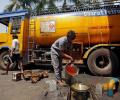
Investors shunned shares of oil marketing companies (OMCs) on Friday as they feared that the government's decision to cut retail prices of petrol and diesel could hurt the companies' profit margins in the near term. On Thursday, the government announced that OMCs will reduce pump prices of petrol and diesel after a record 22 months, making them cheaper by Rs 2 per litre in the national capital. The changes were effective from Friday.

The ongoing second quarter earnings, movement of oil benchmark Brent crude and the uncertainty in the Middle East would dictate terms in the domestic markets this week, analysts said. Furthermore, the activities of Foreign Institutional Investors (FIIs) will also influence trading in the markets. "A slew of earnings reports from heavyweights expected this week will significantly impact market direction.

Notwithstanding the robust turnaround in the financial performance for the June quarter (Q1FY24), stocks of state-run oil marketing companies have been in a downtrend in the last month. The fall comes on a rise in crude oil prices that have surged to a 7-month high of $88 a barrel. A busy political calendar in the months ahead that may see the government keep a lid on auto fuel prices is also a dampener, analysts said. Shares of Hindustan Petroleum (HPCL), Bharat Petroleum (BPCL) and Indian Oil (IOC) have shed 9-11 per cent since their respective earnings announcement between July 26 to August 4.

After a quiet April-June quarter in 2024-25 (FY25), the operational and financial performance of India's largest listed hotel company, Indian Hotels Company, clearly rebounded in the July-September quarter (Q2) of FY25. With double-digit growth in the average room rate (ARR) and higher occupancy, the Taj Hotels chain owner reported a 16 per cent revenue increase and a 30 per cent rise in operating profit.

Shares of Tata Consultancy Services (TCS) declined after the information technology (IT) major reported a 1.3 per cent sequential drop in net profit for the March quarter, prompting several brokerages to cut their target prices. The TCS stock fell as much as 1.26 per cent during the day to Rs 3,205 per share.

Indian Hotels reported strong consolidated revenue growth of 29 per cent year-on-year (Y-o-Y) in the third quarter of the current financial year (Q3FY25), led by revenue per available room, or RevPAR, growth of 15 per cent. The average room rate, or ARR, was up 13 per cent and occupancy improved 120 basis points (bps) Y-o-Y on a standalone business. Like-for-like revenue growth was 15 per cent Y-o-Y, while TajSats (airline catering) grew by 18 per cent Y-o-Y.

The investors had pumped in a net sum of Rs 2,965.66 crore on February 11, the second-highest single-day inflow so far this month.

Major Indian carmakers are preparing for sluggish domestic PV sales growth of just 1-2 per cent in FY26.

Despite sharp interest rate cuts expected in this financial year amid easy liquidity conditions, state-run banks are treading cautiously on their loan growth projections for FY26. Most large banks are projecting loan growth at 11-13 per cent, almost similar to the previous financial year.

Domestic equity benchmarks ended marginally higher on Thursday, with the Nifty settling at a fresh record, amid mixed cues from global markets.

Housing demand should improve nationwide after the Reserve Bank of India (RBI) cut the repo rate by a larger-than-expected 50 basis points (bps) on Friday, said real estate industry executives. The rate cut comes after housing sales in top Indian cities in the first quarter of 2025 dipped 28 per cent due to skyrocketing residential property prices and geopolitical headwinds, according to Anarock.

'Markets could face uncertainty in the short to medium term.' 'It would be prudent to invest in alternative asset classes, especially debt, for about a year.' 'Bank fixed deposits are offering rates as high as 9 per cent per annum and these can be used as a great hedging tool until equity markets stabilise.'

The Sensex ended up 48 points at 28,386 and the Nifty gained 13 points to close at 8,476.

'Many global investors have been overweight on dollar assets, so some diversification or hedging is naturally expected.'

Footwear companies were among the weakest performers in the consumer discretionary sector during the October-December quarter (Q3) of 2024-25. The combined revenue growth of the top four listed firms was just 2.9 per cent year-on-year (Y-o-Y) - the lowest among major discretionary categories.

Automobile giant Tata Motors' shares were in demand on Wednesday as the stock rallied as much as 3.69 per cent to hit an intraday high of Rs 671.80 per share, before settling 3.18 per cent higher at Rs 668.45. By comparison, the BSE Sensex settled 0.10 per cent, or 72.56 points, lower at 74,029.76.

Indian auto component exporters may suffer a hit of 2,700 crore to 4,500 crore on their earnings after the imposition of steep US tariffs on key automotive parts, credit rating agency ICRA said in a note on Monday. The new 25 per cent tariff on engines, transmission, electrical components, and other auto parts may moderate the overall auto component industry's revenue growth to 6-8 per cent in 2025-26 (FY26), down from an earlier projection of 8-10 per cent.

India's top listed real estate developers reported steady growth in Q4FY25, supported by healthy pre-sales, even as earnings reflected signs of moderation amid elevated housing prices and subdued launches.

Hyundai aims to raise exports to 30% of output by FY30 as domestic sales slow; six EVs among 26 product launches planned as part of long-term growth strategy.

A higher-than-expected consumer price inflation (CPI) print for March in the US has dashed hopes of an interest rate cut by the US Federal Reserve (US Fed) in June. Analysts now expect the US central bank to start cutting rates in September, provided inflation remains in check and oil prices remain supportive. The markets, analysts believe, partially factored in this possibility.

Wipro on Wednesday reported a 25.9 per cent year-on-year rise in consolidated net profit for the March quarter to Rs 3,569.6 crore, but warned of a weak quarter ahead with up to 3.5 per cent expected drop in IT services revenue for Q1FY26, amid global uncertainties. CEO and Managing Director Srini Pallia said clients remain cautious in the face of macroeconomic uncertainty.

From the Sensex pack, Infosys, HCL Technologies, Infosys, NTPC, Mahindra & Mahindra, Tata Consultancy Services, Nestle, Tech Mahindra and Bajaj Finance were the major gainers. Power Grid, Larsen & Toubro, Maruti, Titan, HDFC Bank, Wipro, HDFC and ITC were among the laggards.

'Expect India to keep doing well irrespective of geopolitics.'

Domestic steel prices have seen an increase over the past couple of months in anticipation of a safeguard duty, but a looming global trade war is likely to weigh as threat of import rises and prospect of export flounders. Data from BigMint showed that in March 2025, hot rolled coil (HRC) prices ex-Mumbai increased by Rs 600 per tonne month-on-month (M-o-M), rising from Rs 48,400 per tonne in February to Rs 49,000 per tonne.

State-owned insurer Life Insurance Corporation of India (LIC) on Tuesday posted a 38 per cent increase in net profit to Rs 19,013 crore in the fourth quarter ended March 2025 helped by lower expenses. The country's biggest insurer had earned a profit of Rs 13,763 crore in the corresponding quarter a year earlier.

'The next decade will be even more transformative,' says Prime Minister Modi. 'We are moving from digital governance to global digital leadership.'

Investors should tilt their portfolios towards domestic-facing defensive sectors, which should help provide stability and shield them from geopolitical and tariff risks.

Dining today isn't just about food -- it's about the experience and the story.

'It is advisable to stay away from the markets for now and buy only on a dip.'

After registering a net profit of Rs 25.1 crore in Q3FY25 and consolidated revenues growing by 7 per cent on a like-for-like basis, Siddharth Mittal, chief executive officer (CEO) and managing director, Biocon, told Sohini Das/Business Standard in a virtual interaction that local manufacturing in the US is a trade off between cost and qualifying to do business there.

From using lavender in traditional Dogri embroidery to making essential oils, beauty products and food syrups infused with this flowering plant, Bhaderwah, once known for its maize fields, is embracing lavender to bring about an economic transformation to their small town.

The primary drivers: Geopolitical disruptions inflating fuel and operational costs, and a surge in travel demand.

India's manufacturing sector growth fell to a three-month low in May, restricted by inflationary pressures, softer demand and heightened geopolitical conditions, a monthly survey said on Monday. The seasonally adjusted HSBC India Manufacturing Purchasing Managers' Index (PMI) fell from 58.2 in April to 57.6 in May, highlighting the weakest improvement in operating conditions since February.

After falling 17 per cent since the start of the year to its March lows, the stock of the country's largest pharmaceutical (pharma) company, Sun Pharmaceutical Industries, has clawed back nearly half of those losses. Recent acquisitions, a favourable court ruling in the case of the hair loss drug Leqselvi, an edge over peers owing to its specialty portfolio, and a diversified global presence have supported the recovery.

The Indian exporting community is "very" concerned about the possible reciprocal tariffs of the US as it could severely hurt MSME shipments to America in the short run, Federation of Indian Export Organisations President SC Ralhan said on Wednesday. He suggested that the government should come forward and support exporters to deal with these tariffs.

Tourists hesitant to visit America due to frequent policy changes there.

Two Japanese auto giants, Honda and Nissan, are moving towards a potential merger, but it remains unclear how their Indian operations will be immediately impacted.

'Like every Budget, this time, too, there is chatter around tinkering with the long-term capital gains tax.' 'Investors may not want to jump into the markets until there is clarity on this front.'
